
Publish Date:
19 June 2026Keywords:
A 91% increase in the number of victims and a 30% increase in the number of offenders between 2017 and 2025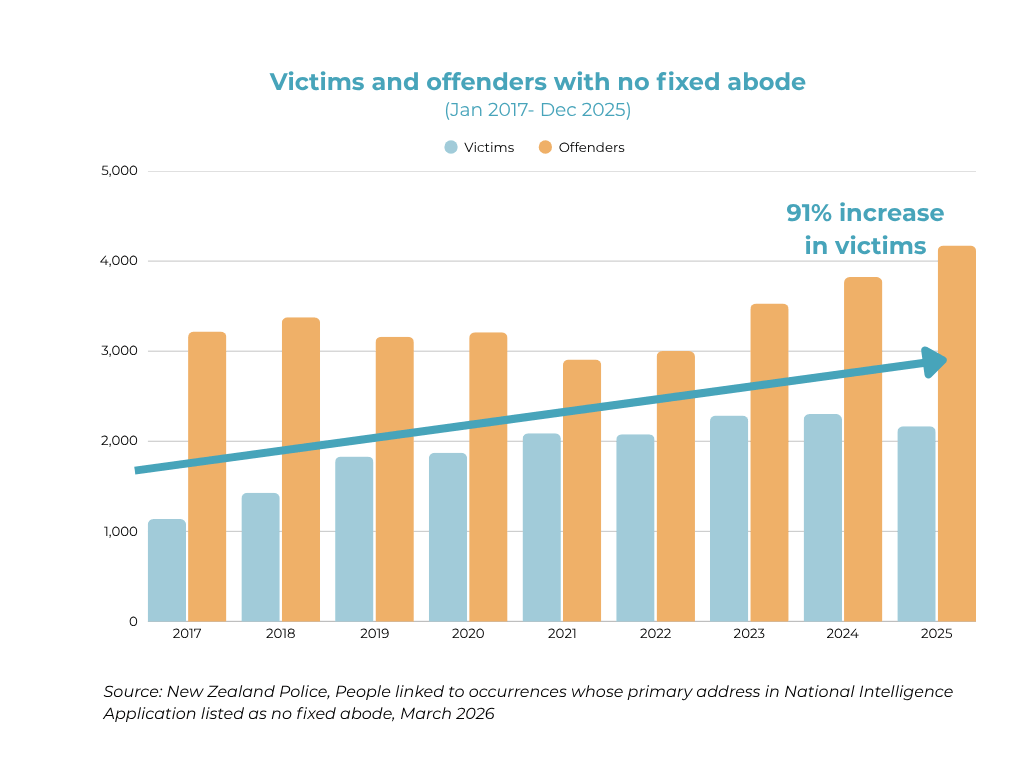
Males were over-represented as offenders (86%) and as victims (55%) which may reflect the higher numbers of men who are “rough sleeping” compared to women and are therefore more visible to enforcement activity. Māori were also over-represented as victims and as offenders. Māori experience disproportionately higher rates of homelessness due to inequities caused by historical trauma and policies that alienated Māori from their whenua as well as the ongoing impacts of colonisation and disadvantage (Lawson-Te Aho et al., 2019).
Access to stable housing and whānau-centred support helps reduce offending by people experiencing homelessness. The evaluation of The Peoples Project (a Housing First programme) in Hamilton found a significant drop in justice interactions across police offences, criminal charges, and corrections events for participants (Ombler et al, 2024). This evidence reinforces international research which shows the success of Housing First programmes in the reduction of people’s interactions with the justice system (Ombler et al. 2024).
Data source: OIA NZ Police, Counts of individuals linked to occurrences who have their primary address in Police’s National Intelligence Application (NIA) listed as no fixed abode 1 January 2017 to 31 December 2025.
